What Makes a Leading Charging Hub Company Stand Out in Today's EV Market
As the global electric vehicle market expands at an unprecedented pace, the role of a specialized charging hub company has become more critical than ever. These companies do not simply supply hardware — they design, deploy, and operate comprehensive charging solutions that power the entire EV ecosystem. From high-power charging hubs serving highway corridors to compact fast charging stations embedded in urban retail environments, the right technology partner can determine whether an infrastructure project succeeds or stalls. This article examines what distinguishes a top-tier charging hub company and why choosing the right partner matters for every stakeholder in the EV charging value chain.
Defining the Role of a Charging Hub Company
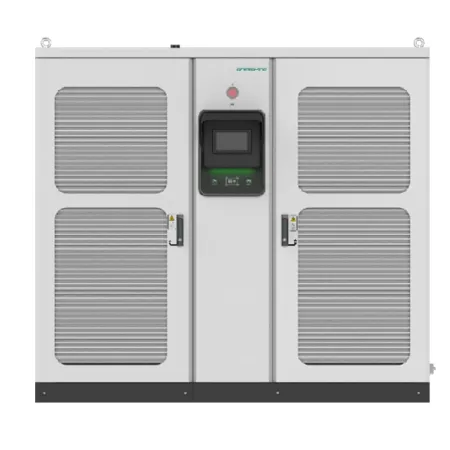
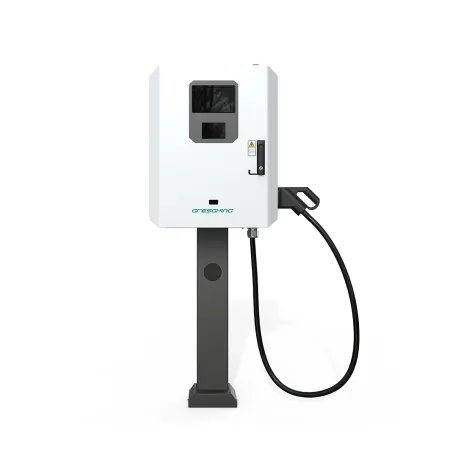
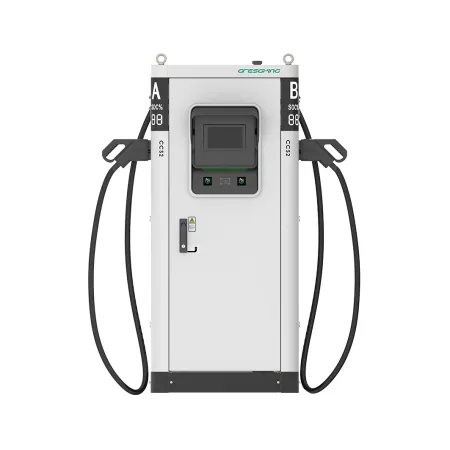
A charging hub company is far more than an equipment vendor. It is an end-to-end infrastructure partner responsible for delivering scalable, reliable, and future-proof charging networks. The scope of services typically encompasses site assessment and electrical planning, hardware selection ranging from 60kW DC stations to ultra-fast HPC terminals, software platform integration, ongoing maintenance, and operational support. In essence, a charging hub company acts as the single point of accountability for turning a bare piece of land into a fully functional, revenue-generating EV charging hub.
Key Capabilities That Set Top Providers Apart
Not all providers are created equal. When evaluating a potential charging hub company, the following capabilities serve as clear differentiators:
- Scalable Product Portfolio: A strong provider offers a full spectrum of charging power levels — from AC wallboxes for home and workplace use to 120–180 kW DC fast chargers and beyond — enabling customers to match hardware precisely to site conditions and user demand profiles.
- Modular Hub Architecture: The most advanced charging hub company designs systems around modular building blocks such as booster terminals and distributed power units, allowing operators to start small and expand capacity incrementally as utilization grows.
- Smart Energy Management: Integration with PV-ESS hybrid systems, dynamic load balancing, and grid-interactive protocols ensures that charging operations minimize peak-demand charges while maximizing renewable energy consumption.
- OCPP-Compliant Platform: Open charging protocols guarantee interoperability with third-party CMS (Charging Management System) platforms, giving site owners freedom from vendor lock-in and access to a broad ecosystem of software tools.
- Global Certification Coverage: Products certified by TUV, CE, CHAdeMO, CCS, and regional standards bodies demonstrate that the charging hub company takes safety, reliability, and market access seriously across multiple geographies.
- Turnkey Project Delivery: From initial feasibility studies through installation, commissioning, and after-sales service, a capable partner manages the entire lifecycle so that customers can focus on their core business rather than navigating technical complexities.
Why Partner with a Specialized Charging Hub Company
Building and operating EV charging infrastructure involves intersecting challenges — electrical engineering, real estate coordination, regulatory compliance, user experience design, and long-term asset management. A dedicated charging hub company brings cross-functional expertise to each of these dimensions, reducing project risk and accelerating time-to-revenue. For fleet operators, this means predictable depot charging with minimal vehicle dwell time. For retail destinations, it translates into increased foot traffic and extended customer dwell time. For public network operators, it delivers high uptime and seamless payment experiences that build driver loyalty.
Industry Insight: According to recent market analyses, charging hubs with integrated energy management and multi-power-level configurations achieve up to 35% higher utilization rates compared to single-format standalone chargers. This underscores the strategic advantage of working with a charging hub company that offers holistic system design rather than point-product sales.
Core Technology Pillars of a Modern Charging Hub Company
1. High-Power DC Architecture
Leading providers leverage liquid-cooled power modules and distributed rectification to deliver consistent output across ultra-fast charging stations. This architecture supports simultaneous multi-vehicle charging without performance degradation — a non-negotiable requirement for high-throughput hub sites.
2. Intelligent Load Management
Dynamic power allocation algorithms allow a charging hub company to serve more vehicles within the same grid connection capacity. By monitoring real-time site demand and available power headroom, the system distributes energy intelligently across all active chargers.
3. Unified Software Ecosystem
From driver-facing mobile apps to operator dashboards, a mature software stack provides remote diagnostics, firmware over-the-air (FOTA) updates, transaction reporting, and industry analytics — all accessible through a single pane of glass.
4. Proactive Service & Maintenance
Predictive maintenance powered by IoT telemetry enables the charging hub company to address potential faults before they result in downtime. Remote troubleshooting capabilities reduce truck-roll incidents by an estimated 40% compared to reactive service models.
Application Scenarios Across Industries
| Scenario | Typical Configuration | Value Delivered by Charging Hub Company |
|---|---|---|
| Highway Corridor Hubs | 360–480 kW ultra-fast terminals with canopy integration | Sub-20-minute full-charge capability for long-distance travelers |
| Fleet Depot Charging | 60–120 kW DC stations with scheduled overnight charging | Guaranteed vehicle readiness with off-peak electricity cost optimization |
| Retail & Hospitality | Mixed AC/DC deployment (7–60 kW) with wayfinding signage | Extended customer dwell time + new revenue stream via pay-per-use |
| Workplace Charging | AC wallboxes + select DC fast chargers for visitor use | ESG compliance enhancement + employee satisfaction improvement |
| Municipal Networks | Multi-vendor interoperable stations with open protocols | City-wide electrification roadmap execution with public-private partnership support |
Selecting the Right Charging Hub Company: Evaluation Criteria
Choosing a charging hub company is a strategic decision with multi-year implications. The evaluation framework below covers the essential dimensions that infrastructure planners should assess before committing to a partnership:
- Track Record & Reference Projects: Examine the provider's portfolio of deployed hubs across different regions and use cases. A proven charging hub company will have verifiable case studies demonstrating successful outcomes in scenarios similar to your own — from utility-scale deployments in Southeast Asia to European urban networks.
- Product Reliability & Uptime Guarantees: Demand transparent data on mean time between failures (MTBF) and field availability percentages. Industry-leading providers typically commit to 99%+ uptime SLAs backed by responsive local service teams.
- Total Cost of Ownership (TCO) Transparency: Beyond upfront hardware pricing, evaluate installation costs, grid upgrade requirements, software licensing fees, maintenance contracts, and expected spare parts consumption over the asset lifecycle.
- Future-Proof Design Philosophy: Assess whether the charging hub company's product roadmap accommodates emerging standards such as Vehicle-to-Grid (V2G), Plug & Charge (ISO 15118), and higher voltage architectures (1000V+).
- Financial Stability & Long-Term Commitment: EV charging infrastructure represents a 10–15 year asset class. Ensure your chosen partner demonstrates the financial health and organizational depth to honor warranties, supply spare parts, and continue innovating throughout that horizon.
The Business Case: ROI Drivers for Hub Investments
For investors and site owners, partnering with a capable charging hub company unlocks several tangible and intangible return drivers:
- Direct Charging Revenue: Per-session fees, subscription models, and ad-hoc payments generate recurring cash flow that scales with utilization rates. High-power hubs on transit corridors consistently achieve the strongest per-charger economics.
- Ancillary Commercial Lift: For retail and hospitality sites, the presence of a charging hub increases average customer dwell time by 45–90 minutes, directly correlating with higher in-store spending per visit.
- Grid Services Revenue: Smart hubs equipped with bidirectional capabilities can participate in frequency regulation, demand response, and peak-shaving programs — creating a secondary income stream that offsets operational costs.
- Brand & ESG Positioning: Organizations that deploy visible charging infrastructure signal environmental leadership to customers, employees, and regulators — strengthening brand equity and meeting sustainability mandates.
- Property Value Enhancement: Commercial properties equipped with purpose-built charging hubs command premium lease rates and attract environmentally conscious tenants who prioritize green amenities.
Conclusion: Choosing Your Strategic Infrastructure Partner
The electrification of transportation is not a question of if — it is a question of how quickly and how well each organization adapts. At the center of this transition stands the charging hub company: the architect, builder, and steward of the physical and digital infrastructure that makes mass EV adoption possible. Whether you are a municipal planner designing city-wide networks, a fleet manager electrifying your delivery fleet, or a commercial property owner seeking to future-proof your real estate portfolio, the quality of your technology partner will shape outcomes for years to come.
By prioritizing scalability, reliability, smart energy integration, and demonstrated track record in your selection criteria, you position your investment for sustainable returns in the rapidly growing EV charging ecosystem. The right charging hub company does not just sell equipment — it delivers confidence that your infrastructure will perform today and evolve tomorrow.
Ready to Build Your EV Charging Infrastructure?
Contact our technical experts for a free consultation tailored to your site requirements, power capacity, and business objectives.